Tuesday, 21 April 2015

ABOUT A SALE DEED

 ABOUT A SALE DEED

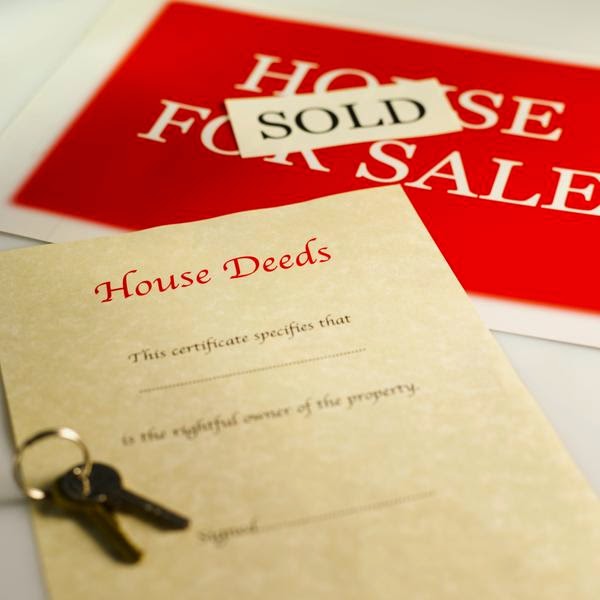
Sale Deed is also known as conveyance deed. This is the document by which the seller transfers his right to the purchaser, who, in turn, acquires an absolute ownership of the property. This document is executed subsequent to the execution of the sale agreement and after compliance of various terms and conditions detailed in the sale agreement.
Before the execution of the sale deed the title of the seller is to be established beyond doubt. Copies of the documents of title must be scrutinized by an advocate, well versed and experienced in property dealings.
If there is any encumbrance on the property, such encumbrance is to be cleared by the seller at his cost.
All statutory payments like property tax, water and power charges and any other payments due on the property should be cleared before the execution of the Sale Deed. Any previous charges or mortgage should be clear before execution of the Sale Deed.
Clearances, and permissions required to be obtained by the seller should be obtained prior to execution of the sale deed.
Latest encumbrance certificate of the property, subsequent to the date of the sale agreement up to the proximate date of sale deed should be obtained, and such certificate should be of nil encumbrance.
All the persons having interest in the property should be made parties to the deed. Particular attention needs to be paid in case of purchase of properties from a Limited Company, Partnership Firm, Hindu Undivided Family, Trust, Power of Attorney Holder and Minor.
Draft Sale Deed
A draft Sale Deed, containing full details of the parties, advance amount paid, mode of balance amount payable, receipt of the balance amount by the seller, handing over the original documents of the property, handing over the possession of the property, handing over the authorization letter to transfer power and water meters, signing of the application for transfer of khatha, title of the seller of the property, indemnifying the purchaser in case of defect in the title, easement rights, will be prepared by the purchaser’s advocate. Such draft Sale Deed should be captioned as draft Sale Deed and shall be signed by the purchaser’s advocate.
A copy of the draft Sale Deed will be given to the seller for his approval. The seller and his advocate will verify the draft sale deed and approve it, or may suggest suitable deletions, additions or amendments. The purpose is to bring forth the correct intention of the parties to the Sale Deed.
On approval of the draft Sale Deed, the same has to be prepared on a quality or a document paper. In Karnataka it may be prepared on good quality paper like bond paper or green paper and the stamp duty may be paid by way of demand draft or pay order or cash. The exact amount of stamp duty should be ascertained from the Sub Registrar office. Purchaser is liable to pay the Stamp duty as per value stated in the documents or as per the Sub- Registrar office value whichever is higher.
Execution
After the Sale Deed is prepared all the parties to the deed shall execute it by affixing full signatures. Each page should be signed by all the sellers. Any overwriting, cancellations, erasures and additions have to be authenticated by full signatures of the parties.
The execution of the Sale Deed requires to be witnessed by two witnesses. The witnesses shall give their full particulars and addresses.
Sale Deed of immovable property of value more than Rupees one hundred needs compulsory registration. The duly executed sale deed should be presented at the jurisdictional sub-registrar office. All the parties, including the confirmation witnesses shall be present at the time of registration and admit the execution. Purchaser also has to be presented for the execution of the documents at the Sub Registrars office. In case the purchaser is not in position to be present before Sub Registrar, he can give Power of Attorney to any of his persons to sign and present the documents on his behalf. In case seller signs the Sale Deed, it is compulsory that through the registered Power of Attorney holder only can represent for him to present the documents before the Sub-Registrar.
Registration
In Karnataka, the Sub-Registrars office, take the photos of purchaser, vendors, witness and also their thumb impressions and print the same on the Sale Deed.
The vendors has to produce all the original documents pertaining to the property to the purchaser. If the property is divided into one or more portions, the seller has to give certified copy or Xerox copy of the documents to the purchaser and has to give declaration to that effect. Generally, the larger portion holder should get the original documents.
There is a time limit for presenting the documents for registration. The time limit is four months from the date of execution.  Thereafter a grace period of another four months is allowed on payment of penalty. The maximum penalty is ten times of registration charges.
At times, the registering authorities may dispute the stamp duty paid. In such cases, the purchaser has an option of paying the additional stamp duty by way of cash or payorder. The purchaser may contest it in which case the Sub Registrar will do the pending registrations and send it to the Registrar of Under Valuation to arrive at proper Stamp Duty.
Parties have to quote their Income Tax Permanent Account Number in case the transactions are done in cash for the property which values more than Rs 5,00,000. Parties, who have not yet been allotted Permanent Account Number, will have to file Form No.60 or Form No. 61 in case of Agriculturists.

The purchaser’s advocate has to take all precautions while preparing Sale Deed. It is a most important document and decides the fate of the purchaser. The purchaser has to preserve the Sale Deed very safely.


For more : 


Monday, 20 April 2015

Protect your house from water


 Protect your house from water

Water is one of the greatest enemies of buildings, and if adequate precautions are not taken it can seriously degrade your precious asset.

Most problems arising out of rain can be tackled with a little forethought and by following precautionary measures.

The world of nature always welcomes rains. The rain rejuvenates flora and fauna. Rain washes clean the environs and external building surfaces. But it's a different story inside. The rains could add to your woes here, causing numerous problems. But these are all solvable, and it is easy to tackle them with proper precautions and corrective measures.

Usual Problems

Rains raise atmospheric humidity. Inadequate sunlight and ventilation affects enclosed areas in buildings. Eventually dampness creeps in, and it is injurious to the people who might already be suffering from respiratory problems.

Dampness leads to the proliferation of algae, discolouring painted walls and resulting in peeling and flaking. Continuous darkness can affect artifacts like oil paintings. Another common problem is the seepage of rain water. Water percolates through minute surface cracks on the roof and creates soggy patches on ceilings and walls. It could even enter hairline cracks in the flooring causing tiles to become uneven.

Water proofing

While constructing a house, water proofing of terraces and toilets is extremely important. Windows and doors facing the exterior must have an overhang or chajja to prevent rainwater from entering the interiors. Water proofing compounds mixed into the plaster give an added layer of protection against water.

The exposed brick, though aesthetically attractive, can become an absorptive surface, in the absence of plastering. Varnishing or painting the brick surface will give partial protection.

Water seepage also occurs through the ground. It is advisable to raise the plinth above ground level, and have flagging concrete or plinth protection along the base of the walls on the exterior.

Interior problems

In bathrooms the dampness caused by steam creates a film on all the surfaces there. A black mould forms on shower curtains and walls, causing the warping of storage cabinets and the plywood backings of mirrors.

In kitchens due to the regular washing of cooking vessels, the splash area above the sink as well as the surrounding floors gets constantly splattered with droplets of soapy water, and this can make the floor a potentially dangerous slippery area.

The wardrobes and carpeting are difficult to maintain areas inside bedrooms. If a damp wall has a wooden wardrobe attached to it, water enters the woodwork and causes it to warp. The subsequent expansion and shrinkage makes the closing of shutters difficult since the alignment is lost. The wet carpets in closed rooms without air movement emit an odour which is very difficult to eradicate.

During rainy days it's the utility areas which are used the most. Semi dry or dripping wet clothes which hang from clothesline or stands, wet umbrellas, rain coats and wet shoes are usually placed here to avoid messing up the rest of the house.

Tips

Some sensible and easy to follow precautions if taken in time can solve most of the above problems.

-Water proofing treatment should be done without fail during construction.

-All rooms should have adequate cross ventilation. This facilitates air movement, and prevents odours.

-Sunlight should be allowed to enter areas that are prone to dampness.

-Areas with dripping water should be periodically mopped to avoid stains on the floor.

-Walls that have constant contact with water should have cladding with glazed tiles or enamel paint. These surfaces then can be wiped dry. Shower curtains have to be wiped dry after a shower since mouldy patches left on the plastic are difficult to clean.

-In rooms where natural ventilation is not possible, air purifiers/ humidifiers, air conditioners, fans and exhaust fans can help maintain optimum humidity.

-The woodwork used for cabinets in wet areas should be raised above floor level if there is water. They should be coated with a melamine layer or should be fabricated from water proof plywood with laminated surfaces.

-The interiors of wardrobes which are dark and damp, are often prone to silverfish and mould. These cause patches on internal walls, wood work and clothes. The use of naphthalene and silica gel desiccant packets helps to alleviate these problems.

-Absorbent floor mats can be used to absorb water from rainy footwear, and avoid muddy patches on clean tiles and carpets.


 For more : 


Friday, 17 April 2015

REGISTRATION OF SALE DEED ALONE WOULD NOT GET OWNERSHIP


 REGISTRATION OF SALE DEED


The general perception amongst the people at large is that  registration of the  sale deed in the concerned Sub-Registrar’s office would conclude the formalities for transfer of ownership of the property from the vendor to the Purchaser or his nominee, but it is not so. The formalities in purchase of immovable property could be broadly classified into pre-registration formalities and post-registration formalities, compliance of both is a must for getting the ownership rights over  the property  transferred in totality in favour of  the purchaser or his nominee.
The term “Post registration formalities” refers to those activities which are required to be performed subsequent to the registration of the Sale Deed. They are:

Obtaining original title deeds:

Once registration of sale deed is completed, the Purchaser has to obtain all the original documents of title from the seller and compare them with the copies which his advocate had scrutinized for rendering his opinion to make sure that  the documents scrutinized and documents referred to in the Sale Deed are  the same and have been correctly spelt. If his advocate had called for production of certain other relevant original documents or certified copies, the purchaser has to ensure that such documents are also made available to him for his custody.
Generally, at the time of entering into agreement of sale only certain basic original documents are made available to the purchaser along with copies of few other documents and therefore, at the time of sale agreement, the purchaser has only skeletal original documents with him and the remaining original documents will be with the vendor himself. Thus, the purchaser has to keep in mind to collect all the remaining original documents from the vendor at the time of registration of the property.

Upon registration of the property, the purchaser  has to collect the original registered sale deed. In addition to this, it is better if he applies and gets a few certified copies of the Sale Deed for his custody and use.

Encumbrance Certificate:

Normally, encumbrance certificate for the period prior to the date of transaction will be made available for scrutiny by the vendor. In order to have Encumbrance Certificate with the reflection of the latest sale transaction between the present vendor and the purchaser, it is suggested that the purchaser may apply for up-to-date encumbrance certificate on the date of registration of sale deed itself so that he can avoid making another trip to the office at a later date for the purpose. 

Physical  Possession of the property:

Taking physical possession of the property is a very important step in a property transaction. Therefore, it is necessary for the purchaser to inspect the property at least a day prior to the date of registration to make sure that the property is free from occupation of any stranger and there is no hurdle to get possession of the property upon purchase.

In some cases, the property could have been under occupation of persons other than the owner/vendor like tenant or leaseholder, trespasser, etc. Irrespective of such occupancy by strangers, the vendor should be insisted upon to deliver vacant physical possession of the property at the time of registration so that the purchaser could exercise his right over the property and  take possession of the same immediately upon purchase and put his lock for the building.
In  case of vacant sites, it is always safe to fence such sites immediately upon purchase, though it is a little expensive. In the alternative, the purchaser may display a board on a prominent place of the site clearly indicating that “This property belongs to XYZ. Trespassers will be prosecuted”.
Periodical visits to the site are necessary to detect and prevent encroachment.

Security Deposit and Tax receipts:

Once a property is purchased, the purchaser is duty bound to make all the statutory payments due on the property to Government and other agencies. Therefore, the purchaser is to get confirmed whether property tax and other levies payable to Municipal authorities, BWSSB, BESCOM, etc., are paid up-to-date and upon finding that any payment is outstanding, either he has to make such payment himself or insist upon the vendor to effect such payments. For this purpose, the purchaser has to collect and verify the latest property tax paid receipt and all the relevant statutory payment receipts from the seller and upon visiting the concerned tax/revenue  offices.


Once the registration of the sale deed is concluded, the purchaser has to ensure that the Khatha of the property standing in the name of the vendor in the records of the concerned local authority is transferred to his  name. For such a transfer, both the seller and purchaser have to sign the application for transfer of Khatha and it is better that such an application is prepared and signed at  the time of executing  the sale deed itself to avoid complications at a later date. The application for Transfer of Khatha along with a copy of the sale deed, duly filled is to be submitted before concerned authority within whose jurisdiction the subject property falls.
The Local bodies transfer the Khatha in the name of the purchaser upon collecting transfer fee which is, generally 2%, of the stamp duty paid on the Sale Deed and issue written confirmation of transfer in the name of the purchaser. Usually, the Local bodies  reassess the property and issue assessment notice in the name of the purchaser. The tax paid receipt should be in the name of the owner.

Water and Power Meters:

Once Khatha is transferred, steps for getting the water and power connections registered in the name of the purchaser are to be initiated. For this purpose, careful verification of the receipts issued by the concerned authorities for the deposit and charges in favour of the vendor is necessary to make sure that such receipts stand in the name of the seller. A letter of No Objection addressed to the concerned authorities by the seller for such transfer of water and power connections and  the deposits made there under in the name of the purchaser is also necessary. The purchaser, along with the letter of No Objection from the seller and the latest Khatha Certificate has to apply to the appropriate  authorities for effecting such a  transfer in his name at the earliest. Upon consideration of such a request, the authorities will issue a written communication intimating the transfer of water and power connections and the deposits in the name of the purchaser.
Though the above mentioned actions are simple in nature, to have peaceful possession and enjoyment of the property purchased compliance with these is necessary.


 For more : 


Thursday, 16 April 2015

Cool the summer - Beat the Heat


 Cool the summer - Beat the Heat


Everyone likes a cool home to relax during the hot summer months. With a little effort you can help your interiors to be more cool and refreshing on a hot summer day.

As the days become longer in the summer season we usually like to make use of it. If, however the windows in the home are old or inexpensive the house may become hot as heat is allowed to get into rooms. Windows of high quality vinyl or wood will help in the energy efficiency of your home.
You should think of using horizontal blinds or shutters on both inner and outer windows. Blinds or shutters should be positioned so the sunlight is directed upwards to the ceiling. This produces the effect of a skylight as it provides indirect, natural light indoors with little cooling cost. Wood blinds and shutters are better than metal blinds. Cooling the home centers on air circulation.

Another popular method of cooling is to use fans when you can't have air conditioners. They are affordable and efficient and help to disperse the heat and circulate air.

Minimal overhead lighting is recommended by interior decorators. When reading or performing a task you could use a lamp rather than turning on an overhead light. Whenever an overhead light is turned on energy furniture in the summer is best. This includes floor coverings. You should roll up the wool and oriental carpets and bring out light coloured cotton area rugs and durries. This is because dark colors absorb and hold heat while light colours reflect it.

If using plants choose them according to the proportions of your living area. Evergreen plants such as scheffleras, dracaenas and ficus are large enough to stand alone and blend well into a large area such as a huge living space or a dining hall. Plants that have glossy leaves and elegant shapes should be preferred and placed in good looking containers. Brass or terracotta ones are ideal.

Finally having a small fountain in your home or a terracotta container filled with water and a few flower petals floating on it will give a cool effect to the home. Your house can be eco-friendly, energy-efficient and a haven of refuge from the summer heat.


 For more : 


Wednesday, 15 April 2015

Querries on Property matters


 Querries on Property matter


Q. Certain hidden facts like pending cases, prior agreements, government notifications of the property cannot be traced out easily by verification of the documents.  How can these hidden factors be uncovered, and what should a purchaser do to protect himself against these hidden factors?
                Rajan Kalyan, JP Nagar, Bangalore

A. Generally seller hands over the copies of the property documents to the purchaser to examine the title. Such documents contain only title documents, which may be cross-checked in the sub registrar’s Office. But they do not disclose any pending litigations, prior agreements which are not registered and government notifications. As such, the Purchaser should be very cautious and make arrangements for thorough search of records at the concerned jurisdictional Courts to rule out the possibility of any pending cases and also in offices of Urban Development Authorities such as : BDA, BMRDA, KIADB, KHB, High way and other planning authorities etc., to rule out the acquisition notifications, if any.
Further, it would be difficult to verify any existing prior agreements or arrangements which are not registered. As such, proper enquiries with owner of the property, and also with neighbours may be helpful. It would always be better to register the sale agreement and get the property registered at the earliest.  Above all, Paper publication of the intention of the Purchaser to buy particular property would help the purchaser to a certain extent. 

Q. What is Paper publication? How does it benefit the purchaser
Shenoy, Rajajinagar, Bangalore

A. Though the Paper Publication may not be a statutory requirement, yet the idea of getting a notice published in the widely circulated newspaper in the locality, is to elicit the information from the general public that a bona fide purchaser is intending to purchase the property from its owner. Besides this, the paper notification also invites objections from various interested persons with documentary evidence in support of their claim within the specific period.

Even after issuance of such paper notification, a person said to have his claim to the property does not lose his rights just because he could not disclose his rights in response to such paper notification within the given time.

Q. I am not able to understand the difference between Khatha Certificate and Khatha extract. Would you please enlighten me on this ? Could you also brief me about the importance of Encumbrance Certificate ?
Veeresh, Uttarahalli

A. Khatha is a revenue record maintained by the municipal authorities in respect of a property standing in the name of a particular person for purposes of assessment and collection of property tax. As it is a secondary document in the absence of primary documents like Sale Deed, Gift Deed, Partition Deed, Release Deed, Will, Grant etc., however it does not establish the title in its totality.
Khatha Certificate is a Certificate issued by the Municipal authority Office confirming that the Khatha of a particular property stands in the name of a particular persons.
Khatha Extract is an Extract of the tax assessment register maintained at Municipal Office giving complete details of the property like: Area of the site, building, property tax levied, access and total tax payable, name of the previous and present owner of the property, etc.
Encumbrance Certificate is issued by Sub Registrar Offices for a specific period as required by the applicant. It contain the details of the property like: Sy. No. House No. boundaries, and encumbrances on such property like: Sale, Gift, transfer, mortgage, if any, which are registered at the said sub registrar’s office. However, the Encumbrance Certificate do not reflect the encumbrance transactions of deeds which are not registered.

Q. What is the procedure for Khatha transfer and how do we know that the Khatha transfer Certificate is genuine and original
Sreenivasa Prasad, Jayanagar, Bangalore

A. Transfer of Khatha of property to your name is to be done by the concerned jurisdictional revenue authority under whose jurisdiction the property is situated. For this purpose, you have to apply for transfer of khatha in a duly filled Khatha Transfer application duly signed by both the Seller as well as Purchaser i.e., yourself, and enclose a copy of the registered Sale Deed, latest tax paid receipt and up to date encumbrance certificate along with the necessary fee.
Thereafter, the authorities do acknowledge receipt of the application and indicate the date by which the process will be completed; however, the entire process is to be required to be completed within 45 days. Meanwhile, the authorities may also call for certain additional information / document etc., if felt necessary for verification and confirmation. Thereafter, the Khatha of the property would be transferred into your name and an endorsement will be issued in your name to this effect. Thereafter, tax paid receipts on such property would be issued in your name, which show that the said property stands in your name.
As regards ascertaining whether the Khatha Certificate issued is genuine and original or not, the Khatha Certificate is usually issued by the concerned jurisdictional Corporation Office and as such you may directly visit such office and obtain the same to confirm its genuineness and originality.     

Q. Do the financial institutions permit the transfer of loan from one institution to other and what is the fee charged for such transfer and whether it would be better to transfer from one institution to other ?      
                                                Sadashiva murthy, Hosakote

A. Financial Institutions allow the transfer of loan from one institution to another even though they don’t want their existing loan accounts to be taken over by other institutions. However, such institution which allow transfer of loan account may charge foreclosure charges for such transaction in order to minimize such transfer of loan accounts. It is left to the customer as to when to transfer the loan from one institution to another taking into consideration various factors of which the major point is to look into the rate of interest besides other benefits which he would get from other institution on such transfer. After obtaining in-principle approval from the taking over institution or bank, such transfer of loan account is possible.


Monday, 13 April 2015

PURCHASERS OF APARTMENT


PURCHASERS OF APARTMENT

People with different culture, taste and habits living in separate dwelling units situate within a compound is not new to the country as it was prevalent in the past under the name and style as Vatara houses wherein small dwelling units were constructed within a compound for occupation and use by different families as their residence.

Vatara houses were constructed in horizontal or in L shape rows with single storey structures unlike the present day multiple storey vertical apartments.


Apartment culture, though of recent origin, has gained tremendous acceptance by the people in a very short time. Generally, it is seen that in apartments, people of different back- grounds, origin and culture live in good harmony and brotherhood. Shalimar Apartment, built in early seventies was probably the first Apartment that was constructed in Bangalore. Apartment culture further gained acceptance in early eighties when several apartments were built in Malleshwaram and other places. Since-then construction of apartments is in full swing in Bangalore and a large number of reputed builders and Promoters are busily engaged in the development of jlifferent Apartment Projects in and round Bangalore to meet the ever increasing demand for commer- cial and residential apartments.

Merits of apartments

Apartments have certain advantages in comparison with the independent houses. The first and foremost advantage the purchaser of an apartment will enjoy is that he need not have to worry about the issues like obtaining plan sanctions, finding a building contractor, supervising the construction work, obtaining basic amenities such as water, power, sewerage facilities for the building and so on which is taken care of by the Developer. The purchaser of apartment need not have to worry for any civic problems which he may encounter after his occupation of the apartment, since these problems are tackled by the Apartment Owners Associationl Builder for which a nominal charges are levied.

The next advantage an apartment owner gets would be the social harmony he would get due to community living. A sort of bondage is developed amongst the residents of apartments.

Further, for the exclusive use of apartment owners/occupants almost all the apartments now-a-days, do have facilities like gym, health-club, recreational center, sports club, swimming pool, private security system within the premises for which again a nominal fee is charged.

De-merits of Apartments

Even though living in apartments do have many advantages, they are not totally free from disadvantages. A Person who lives in an apartment generally is deprived of his privacy. Further, the apartment owner is prevented from carrying out any major addition, alteration or modification to his apartment to suit his needs. All such repairs, alterations and modifications are to be carried out with least inconvenience to other apartment owners and any damage or loss caused to the other apartment owners are to be compensated. The amount collected by the Apartment Owners Association to meet the expenses for general maintenance and upkeep may be more than what a person would have spent had he owned an independent house and could be much more than what is required for such maintenance. There is every likelihood of such a common fund being misused by the office bearers of the Association or over which there could be some misunderstanding amongst the apartment owners leading to unsavoury situation.

Apartments would fetch a much lower price compared to an independent house during its second sale. Further, any dilapidated single apartment would fetch no buyers since the land on which such apartment is built is owned by all the apartment owners and the seller does not have the exclusive ownership right over the land on which such apartment is situate. On the contrary, a dilapidated independent house would generally get prospective buyers irrespective of the condition of the structure since new structures could be put on such sites after demolishing the existing ones and the seller of such a dilapidated house will transfer his right, title and ownership of the land as well.

How to proceed?

As in the case of purchase of any other property, verification of ownership title is one of the pre-requisites for purchase of an apartment also. Though the builder of apartments provides legal opinion given by his advocate regarding subsistence of marketable and valid title of the vendors, it is always better that the intending purchaser of an apartment gets the title report of the property scrutinized from an advocate of his choice having vast knowledge and experience in property dealings. The legal scrutiny report shall contain detailed information regarding the origin, flow of title, present status of the owner, validity of the OPA, Joint Venture, if any, entered into between the owner and the Developer.

Another very important aspect which requires consideration is to ascertain whether the approval for construction of apartments and the plan has been obtained form the competent authority and to find out whether commencement and completion certificates have been issued by such an authority.

Location of the building is another important aspect which one has to consider before purchasing an apartment. This is mainly because any building which has no proper access to main roads with insufficient public transport and other civic amenities such as water, electricity supply, proper, sanitation, parks, market place, hospitals, schools, etc. would put the purchaser of flat to a great hardship and inconvenience.

Apart from all these, the previous history and record of the Builder is necessary to be verified for which purpose, it is always advisable to visit some of the4 projects executed by the builder in advance.

Powers of the Sanctioning Authority

For grant of approval for building construction and the plans, different authorities are delegated with this power under different statutes. While, the village Panchayats are empowered to give license for construction of building consisting of ground and first floor, the City Municipal Corporation can approve plans for ground plus three upper floors. The BBMP or BDA or any other concerned Town Planning Authority can approve building plans of land for construction of multistoried buildings apart from constructing an independent house. In the case of high rise buildings consisting of more than four floors, No Objection Certificates form BWSSB, BESCOM, Fire force authority, BSNL, Airport Authority of India and Karnataka State Pollution Control Board are to be compulsorily obtained.

It must be kept in mind that anyone who violates the building bye-laws and zonal regulations would expose himself to the risk of demolition of such structure any time in the future.


Normally, before purchase of an apartment, a sale agreement is executed by the Owner, [represented by the OPA Holder where there exists a OPA holder] and the Builder, agreeing to sell an undivided share in the land in favour of the intending purchaser. While at the same time, a construction agreement is also executed by the Builder in favour of the intending purchaser agreeing to construct an apartment for him. Once construction of apartment is complete, a sale deed is executed jointly by the vendor of the land and the builder/Promoter in accordance with the terms and conditions of the Joint Development Agreement, if any, in favour of the purchaser. The sale deed specifically recites the duties and responsibilities of the buyer and the seller. As regards sale consideration, it is arrived at upon consideration of the various aspects such as location, specification of the work, carpet area and percentage of Carpet area to Super Built up Area and as agreed to between the parties.


Undivided share is the percentage of share conveyed in the total land along with the apartment to the purchaser. This percentage depends upon the built up area of an apartment and the actual extent of land upon which the apartments are constructed. As the built up area increase the undivided share over the land also increases.

Super Built-Up Area

Super built up area is the saleable area generally applicable to apartments. Super built up area consists of actual flat area plus proportionate common areas like staircase cum verandah, balcony, lift area and other common areas etc.

Since the price of an apartment depends upon the super built up area, it is advisable for the purchaser to have some knowledge about Carpet area, plinth area and super built up area before purchase of an apartment. Generally super built up area should not be more than 25% of the carpet area.

Registration expenses

It is obligatory on the part of the purchaser to bear the expenses incurred towards stamp duty, registration charges and other incidental expenses to be incurred in connection with the registra- tion of the apartment. Infact, the Builders are collecting Sales tax, service tax, statutory deposits for Bescom and BWSSB.

Registered sale deed

Registered sale deed is the document which establishes ownership title of the apartment in favour of the purchaser. While making the Registration of Sale Deed, certain factors need to be verified, such as: Operative words of the Sale Deed; Consideration passing details; Devolution of the Property conveyed; Flow of title of the Property to the Vendor; Indemnity Clauses, etc. .

Further, the property which you intend the purchase is to be properly conveyed to you along with undivided share of land, besides Super built-up area.  Generally, in the Apartment land owners will be more than one person, in such cases, they have to be represented by the Developer being the Registered General Power of Attorney holder for the Developer’s share of land; and in case of Owner’s share of land, basing on the Sharing Agreement, they cannot convey the flat individually and instead all the owners jointly only can convey the property because it being undivided share of land and right of ownership of ingress and egress to be conveyed effectively.  Further, the Sharing Agreement is just an agreement and it cannot convey any ownership rights. Relying on the sale deed the concerned Revenue authorities issue other supporting documents of title such as Khatha Endorsement, Khatha Extract and the Tax paid receipts.

Registration under Apartment Owners' association

After completion of construction and handing over of the apartments to the purchasers, the owners of such apartments are required to form an association for the general well-being of the owners or residents of the apartments and for maintenance of common areas. Upon formation of such an association, the builder is duty bound to hand over originals of all the relevant title deeds, detailed drawings of electrical, water and sanitary lines to enable the Association to utilize the same for the common good whenever required. The Apartment Owners’ Association can be formed either under the Karnataka Apartment Owners’ Association Act or Karnataka Societies Act.

A word of caution


Do not go by glossy advertisements and tall claims of the builder. There are several instances wherein the apartments purchased by a few are inflicted with certain latent defects which remain unattended to by the builder when once the sale transaction is complete pushing the purchaser to suffer both in terms of comfort and finance. There are many reputed builders available in the market with impressive track records. Choose anyone of them and have a peaceful enjoyment of your apartment.